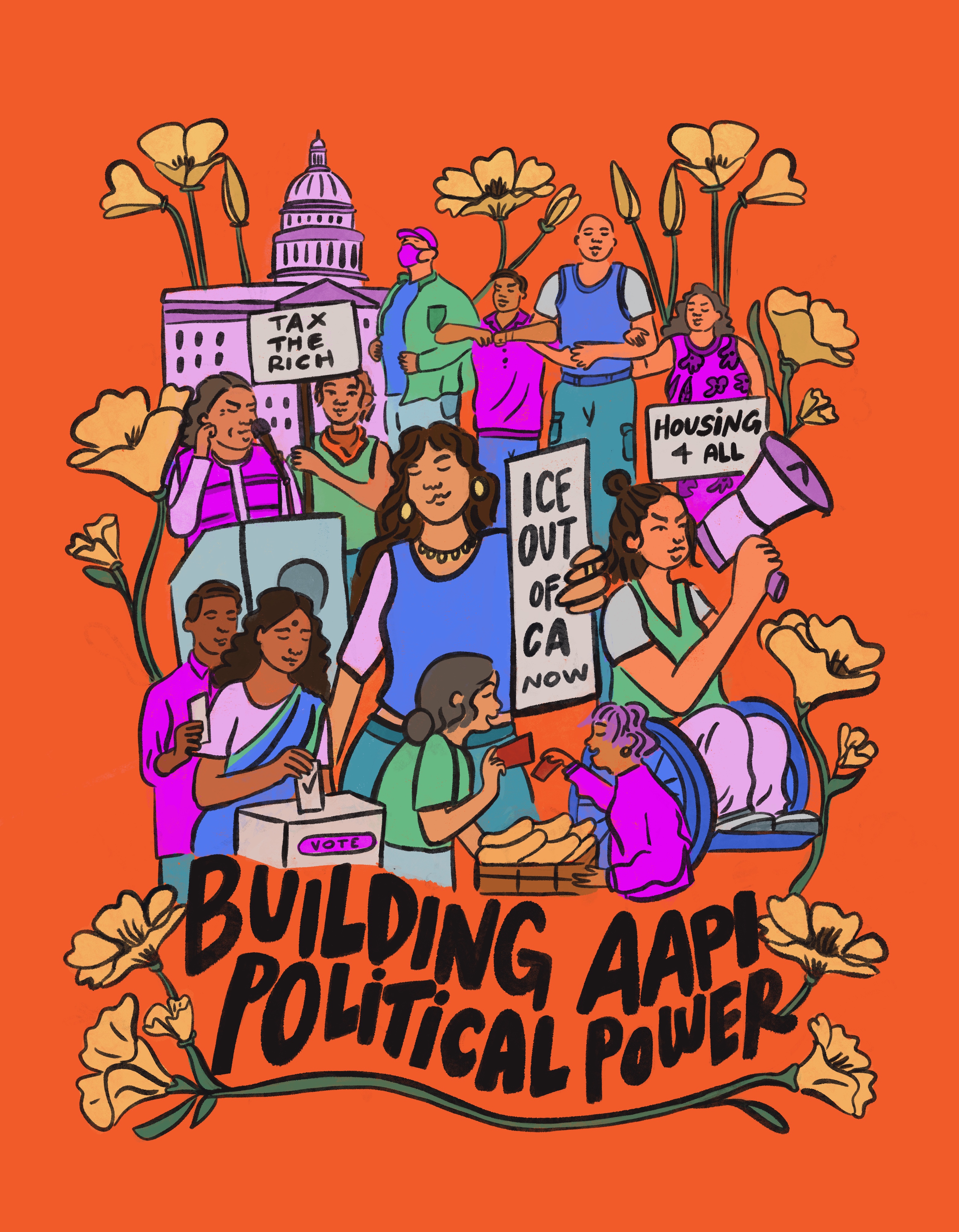
2026 CALIFORNIA VOTER GUIDE & STATEWIDE PROPOSITION 
ENDORSEMENTS

In the U.S., Asian immigrants were barred from becoming naturalized citizens until 1952. Because of that, our communities were denied a vote in our democracy. Today, we’re still fighting to make sure every voter, regardless of what language we speak, is able to cast our ballots.
These positions were voted on by the AAPI FORCE Steering Committee, which includes: Asian Pacific Environmental Network Action (APEN Action), Collab Action Fund, Chinese Progressive Association Action Fund (CPA AF), Filipino Advocates for Justice Action Fund (FAJ AF), Hmong Innovating Politics Action Fund (HIP AF), People Power Action Fund (PPAF), Pilipino Action Center (PAC).

YES on PROP 1:


Veterans and Affordable Housing Bond Act of 2026 


Prop 1 is a much-needed investment to lower the cost of housing for everyday Californians. It would issue $11.25 billion in bonds to fund the construction and preservation of affordable housing, expand homeownership for low- and moderate-income Californians and veterans, and invest in supportive housing for people who are chronically homeless or at risk of becoming so.
 
The bonds that would fund these programs are not a tax but another way to raise money; investors make loans to the government that the government then pays back over time with interest.


‍
‍

YES on PROP 2:

Save for California’s Future Act


Allows the state government to put away 20% of state revenue into a “rainy day” savings fund, which is currently capped at 10%.
‍
Also lets the state use some extra funds to pay down $20 billion of federal debt taken on during the COVID-19 pandemic.
‍
This measure grants the state additional flexibility in meeting budget needs

YES on PROP 3:

The California Children’s Education and Health Care Protection Act of 2026


Prop 3 makes permanent existing taxes on the top 2% that help fund public education, healthcare, and other services that Californians depend on.
‍
If the tax expires in 2031, people earning $743,000 or more a year will receive major tax breaks, while our schools would lose $2-6 billion in cuts annually. 

Supporters: CA Teachers Association, CA School Employees Association, CA Federation of Teachers, among others
‍

YES on PROP 4:

Allows public campaign funding


Billionaires and corporations spend millions to shape politics — Prop 4 would help level the playing field to make ordinary voices matter more. The proposition does this by giving the state and all local governments the option to offer public campaign financing to candidates running for elected office, which already takes place in cities such as Los Angeles, San Francisco, Long Beach, Oakland, and Berkeley. 

Public campaign financing programs help grassroots candidates compete against well-financed corporate backed opponents. For example, in Los Angeles, the city will provide a 6-to-1 match for every small dollar donation from a local Angeleno. 
‍

YES on PROP 5:

Changes the recall process


Changes recall elections to one question: should this state officer be removed or not?

If most voters say yes, the seat gets filled through the line of succession, an appointment, or a special election. Right now, voters first decide on removal, then pick a replacement — and whoever gets the most votes wins, even if it’s under 50%.

YES on PROP 37:

California Middle-Class Homeownership and Family Home Construction Act

Creates a fund to provide low cost mortgages for middle and working class homebuyers earning less than 200% of the area median income. This would be funded by a $25 billion bond, which are credits the government sells to investors.

YES on PROP 38:

Authorizes bonds for immunology research


Creates a fund ($8 billion in bonds) for public universities to research cancer, heart disease, Alzheimer’s, and other diseases and develop treatments for them. Californians would get discounts on new treatments and medicine that may be developed from this research.

NO on PROP 39:

Makes voting more difficult and less secure for citizens


Would require voters to present identification when voting in person or require voters to submit personal information like Social Security numbers when voting by mail.

Voting illegally is already a felony, measures like these to force ID have been proven to suppress voting participation, especially for people of color.

NEUTRAL on PROP 40:

Billionaire Tax


One-time 5% wealth tax on billionaires to fill gaps in the budget cuts by the federal government last year. The funding would go toward healthcare coverage, education, and food assistance.

While we believe that billionaires should always pay their fair share, our communities deserve more sustainable funding than just a one-time tax.

NO on PROP 41:

Requires new audits and blocks Billionaire Tax


Stops new taxes like the billionaire tax from being exempted from the state’s spending limit and would require audits of new tax-funded programs. Makes it more difficult for governments to raise needed resources.

NO on PROP 42:

Bans wealth taxes and blocks Billionaire Tax


Blocks features of the proposed billionaire tax including any new state taxes on personal property, intellectual property, retirement accounts, and similar assets, and it would also restrict when lawmakers or ballot measures can impose taxes retroactively.

NO on PROP 43:

Makes it harder for voters to fund local services where they live

Another corporate-backed measure, Prop 43 would require two-thirds voter approval for new local special taxes. The supermajority threshold would make it much harder for cities and counties to fund things like schools, fire departments, and libraries, even when most voters clearly want to pay for them.

A small, well-funded minority would get veto power over what the majority wants, and local governments end up starved for cash they actually need.

NO on PROP 44:

Restricts nonprofit health clinics’ spending


Forces community health clinics to spend at least 90% of their revenue on direct patient care, with steep fines for clinics that don’t comply. These restrictions could strip billions from clinics, push many to operate at a loss, reduce language interpretation services, and cause widespread closures—especially in rural and underserved areas. 

NO on PROP 45:


Restricts environmental law to promote construction projects

Guts state environmental laws (mainly the California Environmental Quality Act) to promote construction projects previously subject to environmental regulation as guardrails.
‍

Corporations pushing the initiative argue that changing CEQA is necessary to build projects deemed “essential” like affordable housing and clean energy. However, it goes beyond those sorts of projects to include things like freeways, dams, and data centers.

Ad Paid for by Force for Change Ballot Measure Committee sponsored by
Center for Empowered Politics. Funding Details at www.fppc.ca.gov.